
ELEPHANTS
Elephants are the largest existing land animals. Three living species are currently recognised: the African bush elephant, the African forest elephant, and the Asian elephant. They are an informal grouping within the proboscidean family Elephantidae. Elephantidae is the only surviving family of proboscideans; extinct members include the mastodons. Elephantidae also contains several extinct groups, including the mammoths and straight-tusked elephants. African elephants have larger ears and concave backs, whereas Asian elephants have smaller ears, and convex or level backs.
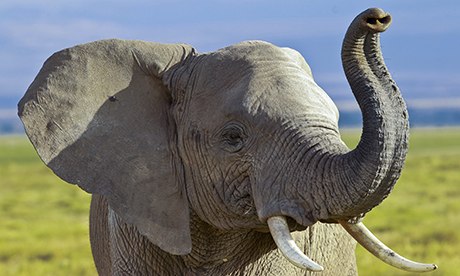
Distinctive features of all elephants include a long proboscis called a trunk, tusks, large ear flaps, massive legs, and tough but sensitive skin. The trunk is used for breathing, bringing food and water to the mouth, and grasping objects. Tusks, which are derived from the incisor teeth, serve both as weapons and as tools for moving objects and digging. The large ear flaps assist in maintaining a constant body temperature as well as in communication. The pillar-like legs carry their great weight.
Elephants are scattered throughout sub-Saharan Africa, South Asia, and Southeast Asia and are found in different habitats, including savannahs, forests, deserts, and marshes. They are herbivorous, and they stay near water when it is accessible.
WHERE WILL YOU FIND THEM?
The African bush elephant can be found in habitats as diverse as dry savannahs, deserts, marshes, and lake shores, and in elevations from sea level to mountains above the snow line. Forest elephants mainly live in equatorial forests but will enter gallery forests and ecotones between forests and savannahs.Asian elephants prefer areas with a mix of grasses, low woody plants, and trees, primarily inhabiting dry thorn-scrub forests in southern India and Sri Lanka and evergreen forests in Malaya.